How Do U Know If U Have Oral Cancer : Bahagian Kesihatan Pergigian Johor Are You A Smoker Did You Know Smoking Can Not Only Harm Our General Health But Affect Our Oral Health Significantly There Is Overwhelming Evidence That Tobacco - Swellings/thickenings, lumps or bumps, rough spots/crusts/or eroded areas on the lips, gums, or other areas.. The death rate for oral cancer is higher than that of cancers which we hear about routinely such as cervical cancer, hodgkin's lymphoma, laryngeal cancer, cancer of the testes, and many others. The most common symptoms of mouth cancer are: You can identify the presence of mouth cancer by examining your mouth and the surrounding areas for certain signs and symptoms. Your dentist will examine your mouth, tongue, throat and lymph nodes for any lumps, sores or discoloration. The accumulating abnormal mouth cancer cells can form a tumor.
Oral cancer (cancer of the lip or mouth) is one of the three most common cancers. The accumulating abnormal mouth cancer cells can form a tumor. Your dentist will examine your mouth, tongue, throat and lymph nodes for any lumps, sores or discoloration. You can identify the presence of mouth cancer by examining your mouth and the surrounding areas for certain signs and symptoms. A sign, such as fever or bleeding, can be seen or measured by someone else.
Oral Cancers Risk Factors Diagnosis And Treatment from post.healthline.com The sore may be red or white and may look like a thickening of the gum. Oral cancer rates have increased approximately 15% from the mid 1970s until the latest (2004) national cancer institute survey. Swellings/thickenings, lumps or bumps, rough spots/crusts/or eroded areas on the lips, gums, or other areas. In the early stages of tongue cancer, especially with cancer at the base of the tongue, you might not notice any symptoms. Sore mouth ulcers that do not heal within several weeks unexplained, persistent lumps in the mouth that do not go away This screening is noninvasive and doesn't involve radiation. Studies show that everyone is at risk for throat cancer, a general term that describes cancer of either the pharynx or larynx. It is a type of head and neck cancer.
It often comes under the category of oral and oropharyngeal.
Gum cancers are a form of oral cancer. Oral cancer (cancer of the lip or mouth) is one of the three most common cancers. Signs and symptoms are ways the body lets you know that you have an injury, illness, or disease. What are the symptoms of oral cancer? The mutations changes tell the cells to continue growing and dividing when healthy cells would die. Oral cancer can appear anywhere in the mouth, including the inside of the cheeks and the gums. The most common symptoms of mouth cancer are: Although it is difficult to separate the rate of oral cancer from dip from the rate of oral cancer from tobacco products in general, the oral cancer foundation records that over 49,000 americans are diagnosed with oral cancer every year. If you have a symptom or a screening test result that suggests cancer, your doctor must find out whether it is due to cancer or some other cause. The only way to definitively determine whether you have oral cancer is to remove some abnormal cells and test them for cancer with a procedure called a biopsy. You can identify the presence of mouth cancer by examining your mouth and the surrounding areas for certain signs and symptoms. Certain strains of hpv can also put you at risk. Oral cancer accounts for roughly three percent of all cancers diagnosed annually in the united states, or about 53,000 new cases each year.
Warning signs and symptoms of oral cancer if a person is experiencing difficulty swallowing and soreness around the throat, they should see a doctor. Mouth cancers form when cells on the lips or in the mouth develop changes (mutations) in their dna. Mouth cancer (also known as oral cancer) can occur anywhere inside your mouth — in your lips, gums, tongue, under your tongue, on the roof of your mouth, inside your cheeks and around your wisdom teeth. The most common early symptom of tongue cancer is a sore on your tongue. Most gum cancers form right on the gum surface and are a type of skin cancer known as squamous cell carcinoma.
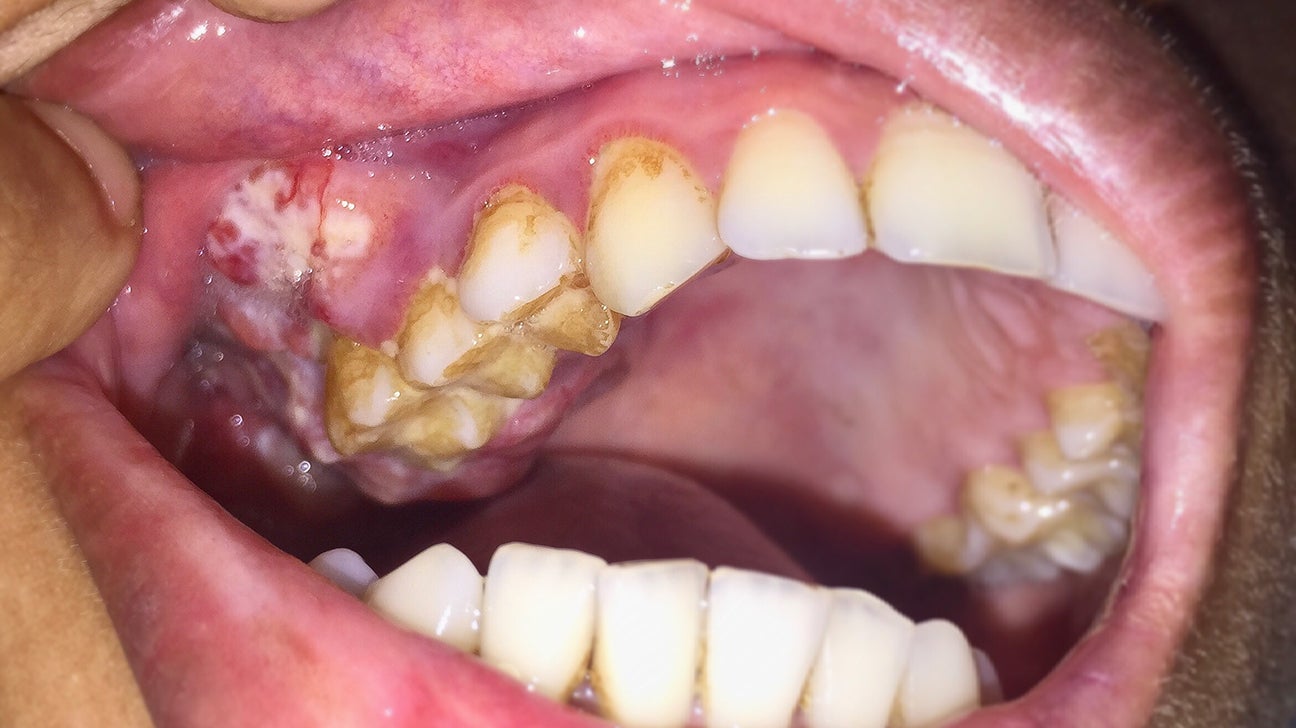
What Does Oral Cancer Look Like Images And Symptoms from post.medicalnewstoday.com The leading cause of oral cancer is from the use of smokeless and smokable tobacco products. Although ulcers and lesions in the mouth are often canker sores — which are relatively harmless — some can be oral cancer. In the early stages of tongue cancer, especially with cancer at the base of the tongue, you might not notice any symptoms. Oral cavity and oropharyngeal cancers are cancers that start in the head and neck area. Studies show that everyone is at risk for throat cancer, a general term that describes cancer of either the pharynx or larynx. The symptoms of oral cancer vary, but anyone. Cancer that starts in the middle part of the throat is called oropharyngeal cancer. The only way to definitively determine whether you have oral cancer is to remove some abnormal cells and test them for cancer with a procedure called a biopsy.
Oral cancer (cancer of the lip or mouth) is one of the three most common cancers.
The symptoms of oral cancer vary, but anyone. As with many other types of cancer, the signs and symptoms of oral cancer vary from person to person. These patches and growths are red and white in color. Sometimes symptoms are linked to certain cancer types. How do you know if you have cancer? This article has been viewed 145,296 times. It is a type of head and neck cancer. If you expand the definition of oral and oropharyngeal cancers to include cancer of the larynx, the numbers of diagnosed cases grow to approximately. This screening is noninvasive and doesn't involve radiation. Oral cavity and oropharyngeal cancers are cancers that start in the head and neck area. Sore mouth ulcers that do not heal within several weeks unexplained, persistent lumps in the mouth that do not go away Oral cancer screening can't detect all mouth cancers. Gum cancer is an oral cancer.
These cancers start when cells in the oral cavity or oropharynx grow out of control and crowd out normal cells. Although it is difficult to separate the rate of oral cancer from dip from the rate of oral cancer from tobacco products in general, the oral cancer foundation records that over 49,000 americans are diagnosed with oral cancer every year. A sign, such as fever or bleeding, can be seen or measured by someone else. Certain strains of hpv can also put you at risk. These patches and growths are red and white in color.
3 from Mouth cancer (also known as oral cancer) can occur anywhere inside your mouth — in your lips, gums, tongue, under your tongue, on the roof of your mouth, inside your cheeks and around your wisdom teeth. What are the symptoms of oral cancer? Although it is difficult to separate the rate of oral cancer from dip from the rate of oral cancer from tobacco products in general, the oral cancer foundation records that over 49,000 americans are diagnosed with oral cancer every year. Oral cancer (cancer of the lip or mouth) is one of the three most common cancers. These patches and growths are red and white in color. A symptom, such as pain or fatigue, is felt or noticed by the person who has it. For oral cavity cancers, the tumor is growing into nearby structures, such as the bones of the jaw or face, deep muscle of the tongue, skin of the face, or maxillary sinus. Patches or irregular growths on the gums can be signs of gum cancer.
Patches or irregular growths on the gums can be signs of gum cancer.
If you have a symptom or a screening test result that suggests cancer, your doctor must find out whether it is due to cancer or some other cause. Oral cancers develop on the tongue, the tissue lining the mouth and gums, under the tongue, at the base of the tongue, and the area of the throat at the back of the mouth. The only way to definitively determine whether you have oral cancer is to remove some abnormal cells and test them for cancer with a procedure called a biopsy. Mouth cancer can develop in most parts of the mouth, including the lips, gums and occasionally the throat. Oral cavity and oropharyngeal cancers are cancers that start in the head and neck area. This article has been viewed 145,296 times. The most common symptoms of oral cancer include: In the early stages of tongue cancer, especially with cancer at the base of the tongue, you might not notice any symptoms. Oral cancer accounts for roughly three percent of all cancers diagnosed annually in the united states, or about 53,000 new cases each year. The most common symptoms of mouth cancer are: Oral cancer can pose a serious health risk.consequently, many patients become concerned when they develop unusual spots or sores in the mouth. Sore mouth ulcers that do not heal within several weeks unexplained, persistent lumps in the mouth that do not go away If oral cancer is diagnosed in the early stages, the survival rate is about 81%.